
Crossroads
Long lives and unrealistic role models

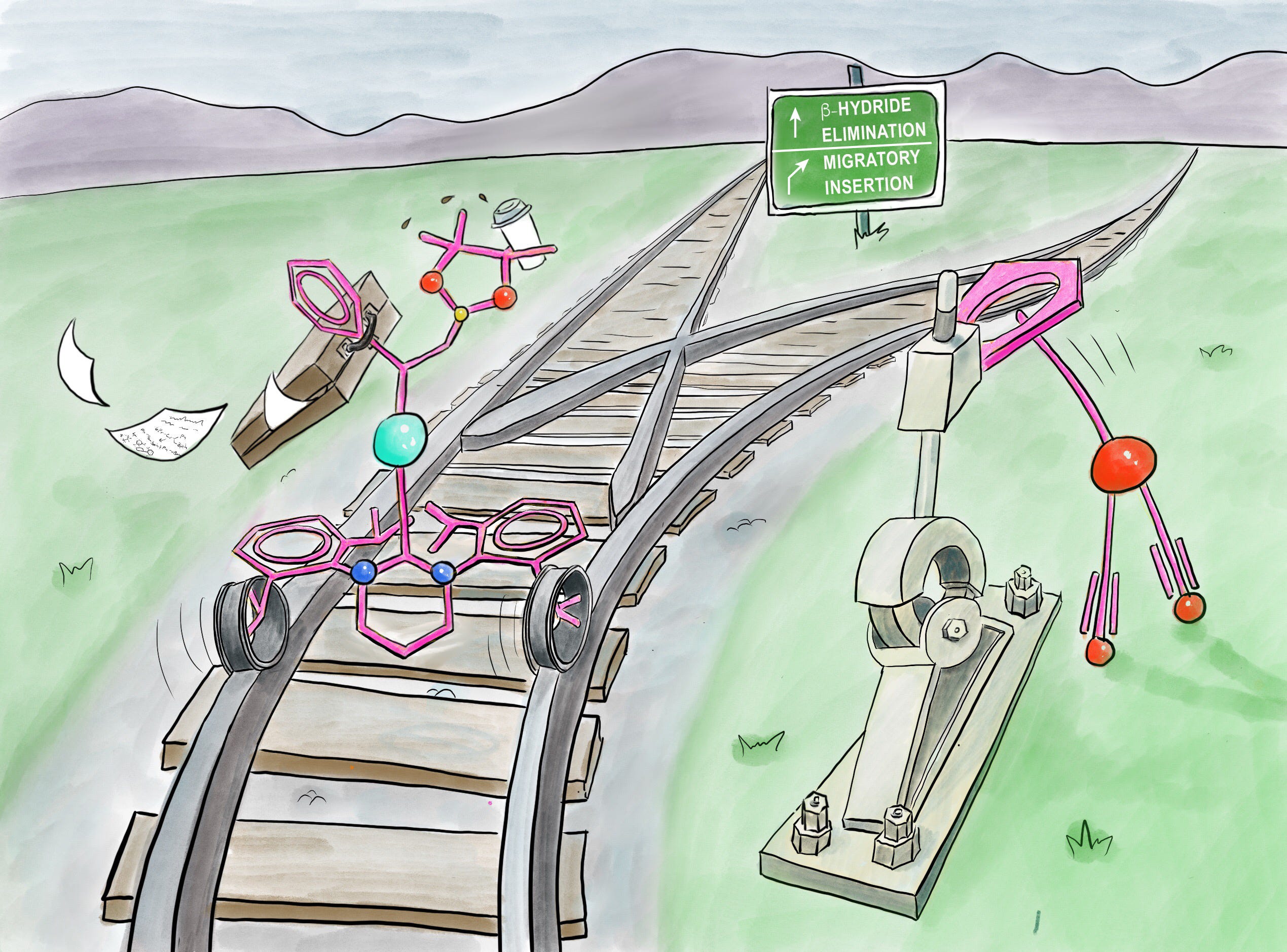
When I drafted my last post, about how AI wasn’t up to the task of science illustration, I had no idea that I was so close to hanging my freelancing shingle back out again. In fact, the announcement that my company would be winding down and closing its doors, like so many others since the recent downturn in biotech, came seven hours before I posted it. Two weeks later, I would be saying goodbye to friends who’ve become family over the past couple of years as we packed up our desks. The day after that, people would be going bananas over the latest AI image generator.1
I’ve always kept my freelance business active for times like these. When I have a full-time job, I respond to inquiries by recommending any number of the highly capable science illustrators I mentioned in my last post, pairing their unique skills to the specific request. Thankfully, a timely inquiry from a former client softened my landing into unemployment. I started it the morning after my last day, but now that it’s delivered, I have some space to think.
There is a common question I get when scientists reach out to talk to me about their career aspirations in science illustration. What should I be mastering? In other words, how should I best be using my time while I wait for my client list to grow? What will make that list grow? Should I learn all of the Adobe programs? Should I be teaching myself 3D modeling? Animation? Should I be polishing my fine art skills? Or learning more science? I thought of this a week or so ago when my husband showed me Dodgers’ superstar Shohei Ohtani’s 64-point plan for becoming a major league baseball player. Known as the Harada Method, Ohtani had filled it out in the 9th grade. It included a variety of areas of growth, from working on core and wrist strength to “remove insecurities” and “be someone people want to support”. So I guess the answer to these questions is to start by figuring out your ultimate goal, and work backwards from that.
When I look around at the current state of affairs and ask myself what I can do, I am reminded of a quote I’ve shared before from 20th-century author, educator, and civil rights leader Howard Washington Thurman, who said, “Don’t ask what the world needs. Ask what makes you come alive, and go do it. Because what the world needs is people who have come alive.”
When I consider the potential market for science communication, the biotech environment, and the funding woes, I am reminded of the advice James C. Collins gives in the quintessential business book, Good to Great. He insists that companies must figure out what the one thing is that they can do better than anyone else in the world.
And the combination of these two pieces of advice reminded me of what my Dad told me when I was 17 years old, also quoted in the post linked above: “Find what you love to do and do it better than anyone else.” Shohei Ohtani is actually a perfect example of having achieved this goal. Through his passion, discipline, determination, and good fortune to grow to 6’3” and 210 pounds, he was literally able to become the best in the world at his craft.
I’m not 17 anymore. But I’m not winding down either. It struck me over Thanksgiving that my mother-in-law took a job when she was five years younger than me that she has now had for almost 40 years. Even though I occasionally emerge from my age dysmorphia to realize with some horror that my youngest co-workers could have been my children, I am also decades from the finish line, I hope. Life is long. What will I do with the rest of it?
The job I left was the opportunity of a lifetime, and I’m grateful to have had it. One of its best features was the enormous variety of work it offered, which helped me see what makes me come alive.
In this role, I made board slides, designed the logo and every iteration of the website, helped write reports, perspectives, award nominations, and media talking points, created the content for all of our social media, and built a library of drag-and-drop illustrations relevant to the work we did. I liked doing all of these things a lot. But there was one aspect of the job that I loved above all else.
I made it my personal mission to try to ensure that every scientist knew what every other scientist was doing. I wanted every chemist to understand what every protein engineer was working on, every machine learning specialist to understand what every gene editor was trying to do. I wanted them to become fluent in each other’s languages. I knew that innovation lurked in those in-between places, where the chance combination of seemingly disparate ideas becomes something entirely new, like puppy yoga. So I gave workshops on design for science graphics that drew on Gestalt theories of perception and pre-attentive processing. I taught them how to use color and abstraction and how to guide the viewer’s eyes through their slides so they didn’t get lost. When they prepared presentations for our internal science talks, I was available for practice talks, slide reviews, and, if time permitted, creating bespoke graphics for them. I explained how their audience needed to know the stakes if they were going to come along with them. They were consistently receptive and grateful, and my proudest moments were when I saw them using the skills I taught them. I imagine the ripple effect of them all going off now and sharing these skills with their future colleagues, by example or intervention.
Finding what I love to do, check.
So now back to the original question. How does one become the Shohei Ohtani of science communication? One feature worth emulating might be how he diversified his skills without trying to master everything. He chose to excel at both batting and pitching. If the MLB decided to replace pitchers with pitching machines tomorrow, he would still pull multi-million-dollar contracts for all of the balls he sends into the stratosphere. There is a rule named after him now that enables pitchers to be designated hitters even after they’re replaced on the mound. He literally changed the game.
I don’t know exactly what that means for me or any of us yet. All I know is that for my entire career, it has been true that work begets work. I know that AI doesn’t begin to address the massive need for good science communication that grows with every new discovery. And I know that one way or another, I will continue to draw, write, design, and teach. In other words, I’ll follow Yogi Berra’s advice: “When you come to a fork in the road, take it.”
I tried it, of course. To compare against earlier models with minimal variables, I used the same prompts I used in the last post. It was decidedly improved from the ones I shared last month, but there were still several inaccuracies that additional prompting didn’t resolve.
Ouch! "Should I learn all of the Adobe programs? Should I be teaching myself 3D modeling? Animation?" feels like the mantra of my last 10 years in the industry. Personally, I think you're on the right track with following your intuition. I would suggest ignoring the unimaginably difficult Shohei Ohtani model -- which I honestly think can work only if you start by the age of 15-20. The rest of us can only find our niche -- and yours is beautifully shaped by your own tapestry of wisdom and experience. In your own way, you're way ahead of Mr. Ohtani :)
Thank you, once again Mary, for your post, which is so relevant to my own journey right now as a graphics editor who is now hanging out her freelance shingle. I was really saddened to hear your unfortunate news recently, but I do anticipate a bounce back in the industry. It will come eventually and we will be there, but in the meantime I am hoping to add to my skills, things I've always been too busy to devote time to learning. Good luck! You are extremely knowledgeable and talented and I will continue to recommend your services.